On Lifeboats
A future for me, but not for thee
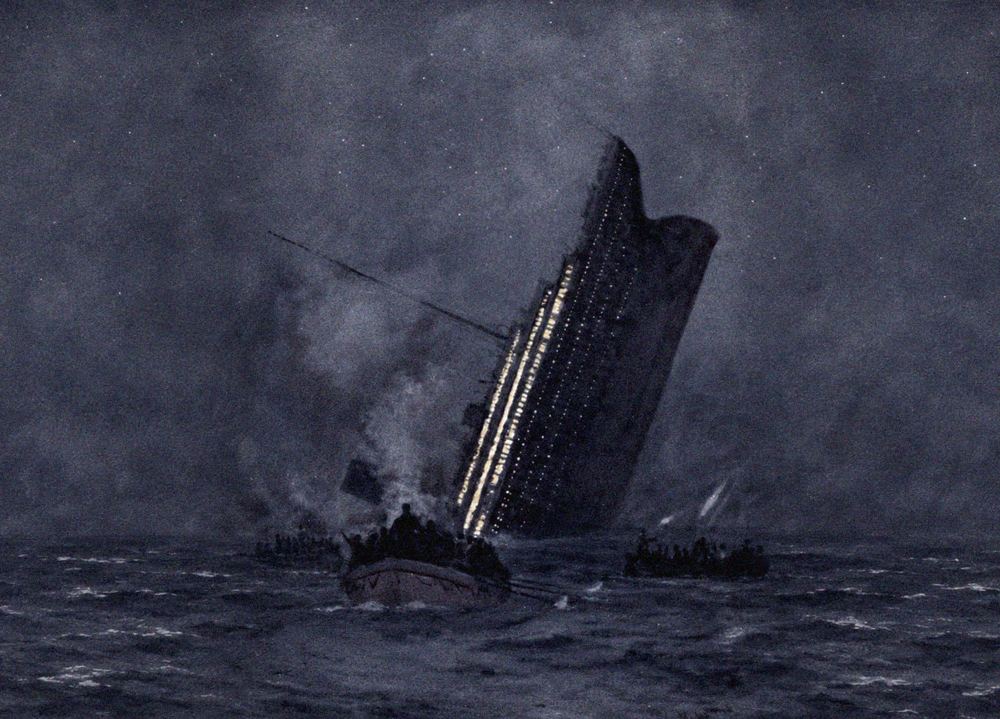

College these days feels akin to being on the deck of the Titanic and hearing a mysterious thud shake the hull of the ship. You have a basic enough understanding of seafaring to know that loud and unexpected noises, followed by screeching, unexplainable halts, aren’t business as usual. Still, a fifty-two-thousand-ton behemoth forged of steel and wrought iron doesn’t just sink without good reason. Too many people worked too hard for too many hours so that people like you could pay too much money to have any and every need you could have on land catered to on board… Right? I mean, on second thought, you don’t really know if that’s true at all. You don’t really know much of anything about the construction of this ship or any ship, for that matter.
Regardless, even if something catastrophic had occurred, what really could you do? Walk up to the bridge and help steer? Slap the engine like it’s a finicky jukebox with a loose wire that needs to be knocked back into place? You are at the whims of forces beyond your control. Even as you sit there, hoping for the best, you find yourself beginning to prepare for the worst. In fact, where are those lifeboats? How many people can fit in one at a time? If you bend over and fashion a rag over your head, could you pass as an unusually tall and hairy child?
As your doubts creep in, you look around the deck to find that, for the most part, people are relaxed. Sure, there are whispers that something is wrong—the occasional frantic staff member swiftly walking down some flight of stairs you can’t access—but we haven’t heard any more noises, right? You listen in on fellow passengers theorizing about what tomorrow night’s dinner will be—about their plans when the ship reaches New York. When you bring up the disconcerting situation at hand, they quickly nod their heads and agree that something does feel off. You get the sense, though, that their answer is more polite lip service than a genuine concern. After all, conceptualizing the disaster that could be unfolding is hard to do when your mind is split between menus and Manhattan.
The first loud thud has led to a series of creaks that can best be described as what happens when you put a Ford F-150 into a blender. Your peers on board are beginning to become restless but assure themselves that their first-class ticket would get them on a lifeboat and off to safety—if it came to that. When you bring up the rumor that the ship has hit a wayward iceberg, you instantly hear back that an iceberg is just water. Water is water, and boats are always going to be fine on water. As time goes on, these arguments begin to feel more like a wish than analysis. If an iceberg were just water, would the boat be making these sounds? Probably not.
The time has come to make a plan. As you rush towards a lifeboat, ready to winch yourself down, you have a voice in your head calling you selfish. You’re really going to leave all these people? You aren’t going to try and help, or to ask others to climb on board? Maybe if you went back and pleaded—really pleaded—you could convince them that what they considered a risk was actually the only sensible course of action left. Maybe. Or, as you suspect, they might become annoyed and irritated that you are so urgently afraid. Another loud rip from down below shakes you back into the task at hand—knowing that if others truly wanted to escape they would be there with you.
As you row off, you notice that a few other passengers with similar foresight have decided to abandon ship as well. Even with others out in open waters alongside you, it feels surprisingly lonely—one body sitting in a vessel that could house five more. The only camaraderie you share with the other rowers is a grim recognition that you had to prioritize your own safety over convincing others to prioritize theirs. The further you get from the boat, the more apparent the crisis on board becomes. The cracks are too deep, too widespread, and too numerous to be fixed. It is going to sink.
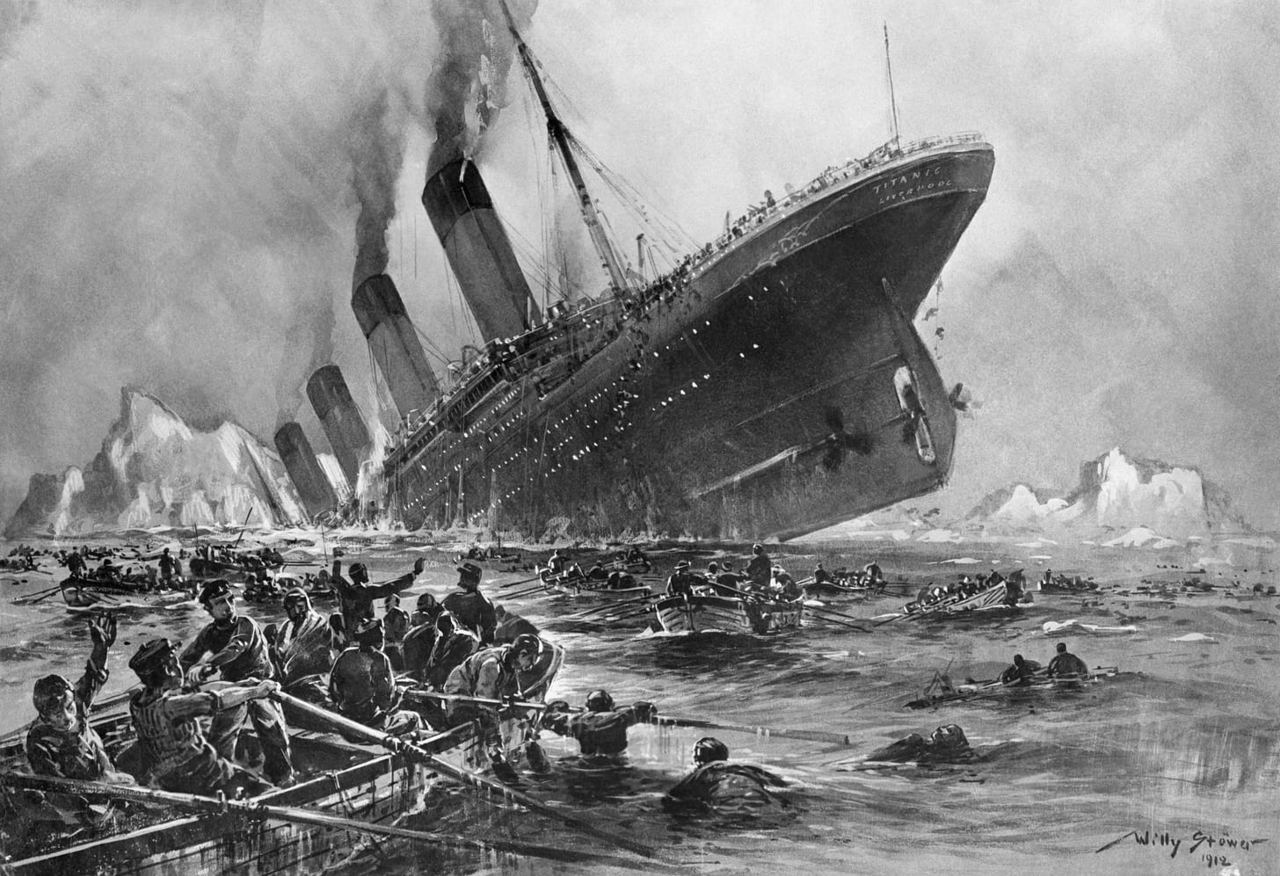
I’ve struggled to write about the academic apathy that I’ve been afflicted with these last few months. Everywhere I go—from my own classes at Boston University to sitting in on Harvard events—I feel as if everyone has heard that thud and nobody wants to acknowledge it. “It,” of course, being AI, and its promise to devour the white-collar work that lets Boston University charge my family seventy thousand dollars a year, and gives kids who go to Harvard the confidence to look at you like a kind but simple-minded creature from the hinterlands. It feels as if I am in a living museum exhibit—an ugly in-between where a college degree is needed to ask Claude to “make no mistakes and wow me.” There is a feeling so firm inside me that everything is going to change more than anyone can possibly expect.
I realize too that, in writing about my dissatisfaction, I am bound to veer into the line of arguments asking why school doesn’t teach us “stuff we will use in real life.” Rather, my point is that the “stuff we will use in real life” increasingly feels as irrelevant as arguing over free will. Entire professions like computer science, finance, accounting, mathematics, legal services, and many, many more are ripe for automation that will, by its very nature, take the jobs of lower-level employees. These are the very jobs—where long hours bring home big paychecks—that serve as the reward for going to high-cost, high-status schools.
Even the hardest-working, Adderall-taking, cocaine-snorting young investment banker has to sleep at some point. Claude, on the other hand, never has to step away. Claude can order a hundred other Claudes to go do research or update spreadsheets, or update the boss’s Claude about the progress that Claude has made. To think that this leads anywhere other than automation—that augmentation is even possible at all—is to believe that Goldman Sachs operates on kindness first and profits second. This is the flaw behind all the headlines about AI not, actually, increasing worker productivity: what really can the worker to do be more productive if Claude is doing almost all of the actual work? What future job is going to exist in a world where the entirety knowledge work can be done faster, cheaper, and better than the fastest, cheapest, and best human? Answer: None.
Even as someone who has been empowered by the tremendous agency that today’s frontier models provide, I find myself unable to shake this feeling that we, as a society, have hit something. The thuds are getting louder, the rips harder to ignore, and the reactions from my peers increasingly defiant and ignorant. Dinner will not be served, we are not going to reach New York, and I need to find a lifeboat.